
Three months. That's how long OpenAI had the agentic commerce field to itself before Google showed up with the Universal Commerce Protocol (UCP).
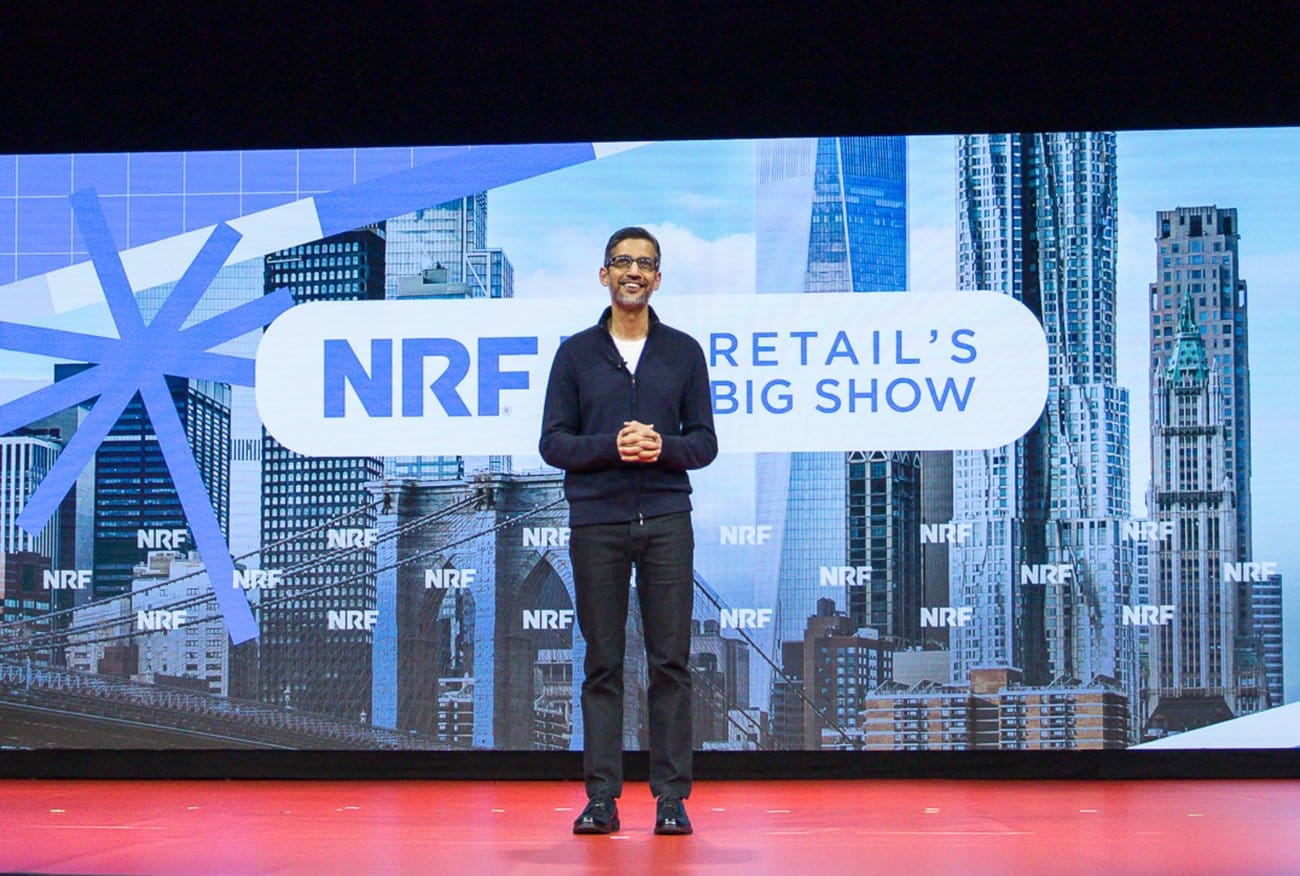
On 12 January 2026, Sundar Pichai took the stage at NRF 2026 to announce UCP - an open standard co-developed with Shopify, Walmart, Target, Etsy, and Wayfair, endorsed by over 20 partners including Visa, Mastercard, and (notably) Stripe. The same Stripe that built the Agentic Commerce Protocol (ACP) with OpenAI!
Is this Google fighting back? Absolutely. But it's more calculated than reactive.
What Actually Is UCP?
The Universal Commerce Protocol is Google's infrastructure play for agentic commerce - the shift where AI agents don't just help you find products but actually complete purchases on your behalf.
UCP defines how agents discover merchants, understand their capabilities, and execute transactions across the full commerce journey. From product discovery through checkout to post-purchase support. It's compatible with existing protocols including Google's own Agent Payments Protocol (AP2), Agent2Agent (A2A), and Model Context Protocol (MCP).
The first implementation powers direct checkout in Google AI Mode and Gemini. You can now buy from eligible US retailers without leaving the conversation. Payment happens through Google Pay (PayPal support coming), the merchant stays as the merchant of record, and the whole thing runs on Google's existing Merchant Center infrastructure.
It sounds similar to what OpenAI launched with ChatGPT Instant Checkout and the Agentic Commerce Protocol in September 2025. That's because it is.
UCP vs ACP: What's Actually Different?
The surface-level pitch is nearly identical. Both enable AI agents to complete purchases directly within conversational interfaces. Both keep merchants as the merchant of record. Both integrate with existing commerce infrastructure. Both claim to be open standards.
The differences matter, though.
Scope
ACP is laser-focused on checkout - the handshake between agent, merchant, and payment provider that turns intent into transaction. It's narrower by design.
UCP tackles the full journey. Discovery mechanisms, capability negotiation, checkout, order management, post-purchase support. It's broader by design.
Discovery
This is where the philosophical split shows. ACP has no native discovery mechanism. If you want to sell on ChatGPT, you go through OpenAI's centralised listing process. Full stop.
UCP includes discovery as a protocol primitive. Merchants can (in theory) publish their commerce capabilities directly on their own domains. Agents discover them without a centralised gatekeeper.
In practice? Merchants selling on Gemini still go through Google Merchant Center. So the decentralised discovery promise is architectural, not operational. Yet.
Payment Architecture
ACP uses Stripe's Shared Payment Token as its first implementation - delegated payment tokens that are single-use, time-bound, and amount-restricted.
UCP takes a modular approach with "payment handlers". Merchants declare which payment methods they support, agents select one, and each payment provider publishes their own handler specification. New payment methods slot in without protocol changes.
Google benefits from having AP2 already built and integrated. OpenAI benefits from ChatGPT users who've already saved payment credentials with the platform.
Integration Surface
ACP launched with ChatGPT. OpenAI controls the integration environment, the user experience, and (critically) the existing relationship with hundreds of millions of users who already trust the platform for questions. Now they're being asked to trust it for purchases.
UCP launched with Google AI Mode and Gemini. Google controls Search, has 25 years of ecommerce infrastructure through Google Shopping and Merchant Center, and processes over a billion shopping queries daily.

The Real Fight Isn't About Protocols
Here's what's actually happening. Two of the most powerful technology companies on earth are racing to own the commercial layer of AI interaction.
OpenAI moved first. ChatGPT already had user trust, conversational context, and high-intent discovery built in. They shipped ACP tight and focused - checkout only, Stripe as the payment rail, Etsy and Shopify merchants at launch. Get it working, then expand.
Google moved methodically. UCP is more ambitious technically - full journey, modular payments, protocol interoperability, merchant-controlled discovery. It's also conveniently compatible with Google's existing commerce infrastructure. Merchant Center feeds? Already there. Structured product data? Already there. Millions of retailer relationships? Already there.
This isn't a protocol war. It's a distribution war disguised as an open standards initiative.
ChatGPT has conversational dominance. Morgan Stanley data shows 65% of 16-24 year olds used ChatGPT in the past month versus 32% for Gemini. But Google has Search volume. Billions of shopping queries daily, often with explicit purchase intent already formed.
The protocol that wins merchant adoption defines the economics of agentic commerce for the next decade. And merchants don't particularly care about protocol philosophy. They care about where the customers are.
Why Google Had to Respond
OpenAI's ACP launch wasn't just a product feature. It was an existential threat to Google's business model.
Google makes money when you click ads during product research. If ChatGPT completes the entire discovery-to-purchase journey inside its own interface, Google never sees the query. The click never happens. The ad impression never serves. The conversion tracking breaks.
According to data from PAZ, ChatGPT referral traffic to Amazon fell 18% month-over-month after Amazon blocked AI crawlers. That's billions in potential commerce volume being redirected away from traditional ecommerce sites.
UCP is Google's counter-move. Keep commerce inside Google's AI surfaces. Let merchants integrate once through Merchant Center and reach users in AI Mode and Gemini. Process payments through Google Pay. Maintain the relationship between Google and both merchants and shoppers.
It's defensive, but smart. Google can't afford to cede the agentic commerce layer to OpenAI the way it arguably missed the early social media shift to Facebook.
The Shopify Factor
Shopify's position here is fascinating. They co-developed UCP with Google. They also support ACP-based ChatGPT Instant Checkout. Their Winter 2025 Edition made every Shopify store "agent-ready by default" through Agentic Storefronts.
Shopify doesn't care which protocol wins. They care about merchant reach. If agentic commerce drives conversions, Shopify merchants need to be there - whether "there" is ChatGPT, Gemini, Perplexity, or Microsoft Copilot.
This is platform-level integration eliminating protocol fragmentation for merchants. Shopify handles the complexity. Merchants get distribution across multiple AI surfaces. According to TechCrunch, Shopify saw 7x growth in AI traffic and 11x growth in AI-driven orders since January 2025.
The implication? Most large retailers will need both protocols. Walmart already supports both ecosystems. Target's in both. Etsy started with ChatGPT, now they're in UCP too.

What This Means for SEO and Ecommerce
I recently wrote about Agentic Commerce (What is Agentic Commerce) and the implications for vendors and SEOs. Are we entering a phase of Agentic Commerce Optimisation (ACO)? Who knows. However, UCP accelerates everything.
Product Data Becomes Table Stakes
Agents don't browse pages. They query APIs, parse product feeds, and evaluate structured data. Google's new Merchant Center attributes go beyond traditional keywords - answers to common product questions, compatible accessories, substitute products.
If your product data isn't agent-readable, you don't exist in agentic discovery. Full stop.
Discovery Shifts to Protocol Integration
Traditional SEO optimised for human searchers clicking through SERPs. Agentic commerce optimisation (ACO) requires protocol-level integration. You're not optimising to rank in position 3 on a results page. You're optimising to be discoverable when an agent queries merchant capabilities.
Google's Direct Offers pilot in AI Mode shows the monetisation layer coming. Advertisers can present exclusive discounts when AI detects a shopper is close to buying. That's not traditional PPC. That's intent-based intervention at the moment of agent-mediated decision.
Trust Signals Matter More
As I covered in the what is agentic commerce piece, agents evaluate products based on multiple signals - reviews, ratings, return policies, shipping times. Third-party validation becomes crucial.
Brand sentiment isn't just marketing anymore. It's a grounding signal that determines whether an agent surfaces your product to the user or not.
Multi-Protocol Reality
You'll need both. ACP for ChatGPT and the OpenAI ecosystem. UCP for Google AI Mode, Gemini, and whatever else Google bolts this onto. Potentially others as Meta and Anthropic make their moves.
If you're on Shopify, this happens automatically. If you're not, you're building multiple integrations or selecting which AI surfaces to deprioritise.
The Timing Is Deliberate
Google didn't need three months to build UCP. They've had Agent Payments Protocol since 2024. They've had Merchant Center infrastructure for decades. The technical pieces were already there.
What they needed was clarity on how serious OpenAI was about commerce. ACP's launch in September showed OpenAI wasn't just experimenting. Instant Checkout going live with Etsy and Shopify, with expansion plans to over a million merchants, signalled real intent.
Google's response at NRF 2026 - the biggest retail conference in the US - with Sundar Pichai presenting in person, wasn't coincidental. It's a statement to retailers: we're here, we're serious, and we have the infrastructure to make this work at scale.
The merchant endorsements matter too. Shopify, Walmart, Target, Wayfair, Etsy - these aren't small regional players. Google lined up major commerce partners before the announcement. That's a coordinated industry response, not a product launch.
What Happens Next
Short term: Both protocols coexist. Most merchants on major platforms (Shopify, BigCommerce, WooCommerce) get both automatically. Independent merchants would integrate whichever surface has their customers first, then add the other later.
Medium term: Platform-level integration handles everything. Merchants stop thinking about UCP vs ACP the same way they don't think about which payment gateway format their checkout uses.
Long term: Either they interoperate seamlessly or we get consolidation. But merchants don't really care - they're present on both surfaces regardless.
The Uncomfortable Truth
For all the "open standard" language, both UCP and ACP are backed by platforms with commercial incentives.
Google wants to keep commerce traffic inside Google properties, serve ads against shopping queries, and maintain relationships with merchants. UCP supports that.
OpenAI wants to make ChatGPT the interface layer for everything, including commerce. They've said publicly they're exploring transaction fees as a business model. ACP supports that.
Stripe endorsed both protocols because they process payments either way. Payment processors don't care which standard wins as long as volume flows through their infrastructure.
The retailers backing UCP have existing relationships with Google through Merchant Center and Google Shopping. The retailers using ACP have existing relationships with Stripe and saw early ChatGPT traction.
None of this makes the protocols bad. But we should be clear-eyed about the motivations behind "open standards" when they're funded and promoted by trillion-dollar companies with competing business models.
What You Should Actually Do
If you're a merchant, particularly in ecommerce, here's the reality check.
Get your product data sorted now. Agent-readable structured data is the foundation layer. Schema markup, detailed product attributes, clear pricing, accurate inventory, shipping and returns pages. This isn't optional anymore.
If you're on Shopify, BigCommerce, or WooCommerce, integration is built in - but you still need to enable it. These platforms have done the technical work for both UCP and ACP. Your job is opting in, accepting the commercial terms (OpenAI's announced they are charging 4% commission on ACP transactions, for example), and ensuring your product data is clean.
If you're on a custom platform, you'll need to build integrations for both. Start with whichever surface has more of your customers (Google AI Mode for most, ChatGPT for some consumer categories), then add the other. The technical lift is real, but unavoidable.
Evaluate the economics before you enable. 4% commission on ChatGPT transactions, potential fees on Google's side, integration costs if you're custom. Calculate whether the incremental reach justifies the cost for your margins.
Don't wait for perfect clarity, but don't rush blindly either. Early adopters get better placement and learn faster. But make sure the unit economics work for your business before you flip the switch.
Focus on trust signals. Reviews, ratings, return policies, shipping reliability - these become ranking factors in agent-mediated discovery. Your margin for sloppiness just shrunk.
The Bigger Picture
Agentic commerce is happening regardless of which protocol wins.

Morgan Stanley estimates $385 billion of US ecommerce revenue could be transacted by agents by 2030. Capital One Research shows 76% of consumers want AI-powered shopping assistants. The behaviour shift is already visible in the data.
UCP vs ACP isn't really the question. The question is whether you're positioning for a world where AI agents mediate commerce decisions, or you're still optimising for 2020s-era browse-and-click behaviour.
Google launching UCP just accelerates the timeline. It forces retailers to take agentic commerce seriously now, not in 18 months when it's more established. It creates platform competition that will drive better merchant economics and more feature development.
Is it Google fighting back against OpenAI? Yes. Is it good for the ecosystem? Probably. Competition between platforms tends to benefit merchants and consumers, at least in the early phases before consolidation.
The real winners here aren't Google or OpenAI. They're the merchants who move early, get the integration right, and start learning how agents actually drive purchase behaviour. Because that knowledge compounds.
The protocol war is a distraction. The commerce shift is real.
Want to know when I post? Subscribe on this page.